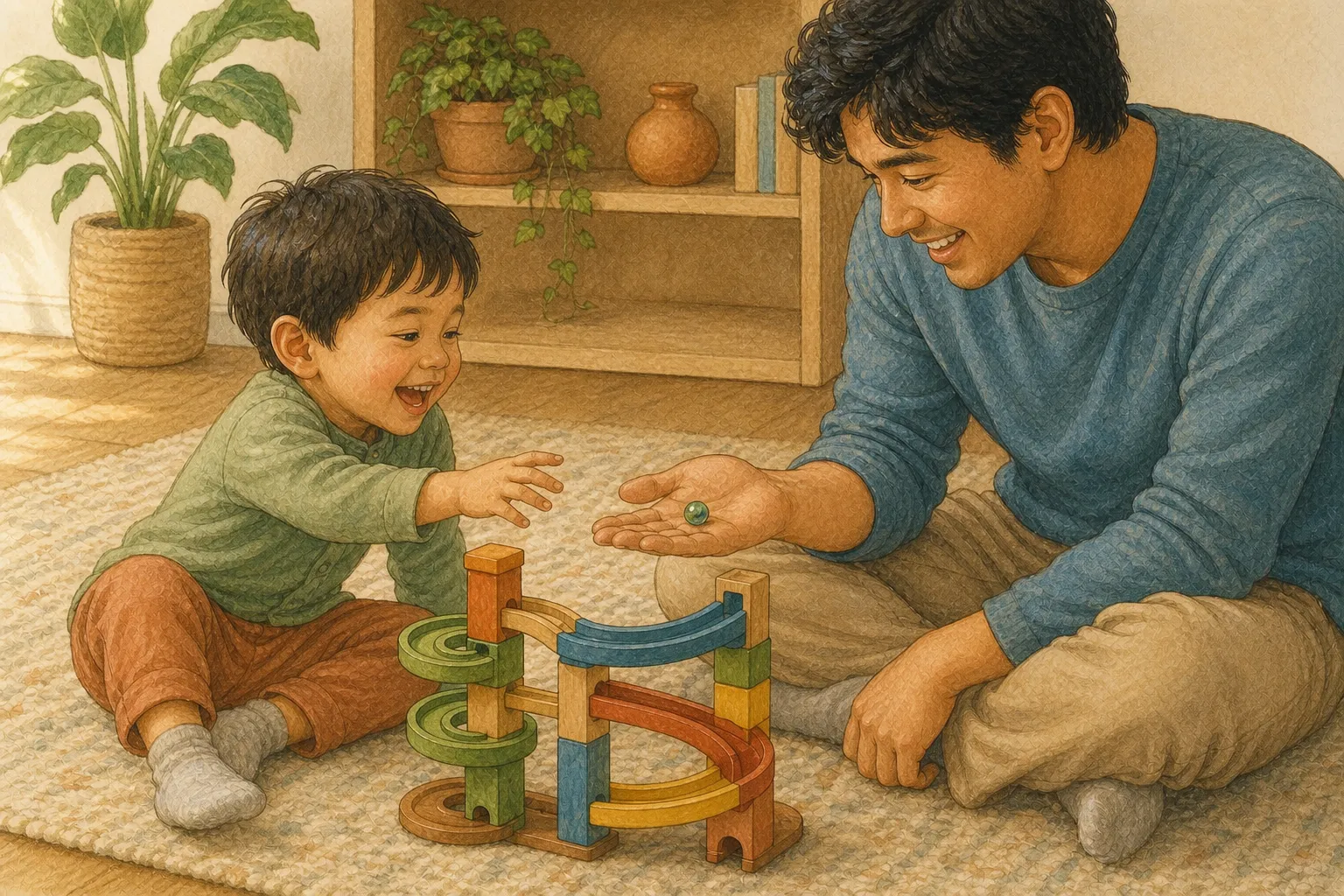
A child who works to get away from the table is not going to learn much at it, however good the program is. Pairing is the deliberate work of changing what the table predicts, and it is the step most often skipped, because it looks like doing nothing.
What it actually is
Everything about a teaching situation is a signal to the child: the adult’s face, the chair, the box of materials, the room. Those signals mean whatever has reliably followed them. If what usually follows is demands, they come to mean demands, and a child will work to avoid a signal for demands exactly as they would work to avoid the demands themselves.
Pairing puts the good things on the other side of those signals first. You show up, the preferred things show up, and nothing is asked. Do that consistently and the adult, the chair and the box start predicting the good part.
The rule everyone breaks
No demands. None. Not “just say ball first”, not “let’s do three and then we’ll play”. A request that slips in works against what the moment is trying to build, and the child usually notices before we do — though one slip does not erase everything that came before it; it is a cue to notice and correct, not a reason to start over.
This is genuinely hard for anyone trained to teach, because sitting with a child and asking for nothing feels like wasted session time. It is not: it is the thing that makes the sessions that follow possible.
Two practical points. Give the preferred items freely rather than dispensing them — if you control the flow, you are still the person who withholds. And be part of the fun rather than beside it: hand things over, join the game, be the one who makes the toy do the good thing.
How you know it is working
Watch approach. Does the child come toward you when you appear? Stay in the room? Come back after wandering off? Bring you something?
That is your measure, and it often moves faster than people expect, though the pace varies. If it does not move at all over a few sessions, something in the arrangement is still predicting demands, and the usual culprit is a small instruction that crept back in.
Then fade in the work slowly: one easy request the child can already do, followed immediately by the good stuff, and back to free play. If approach drops, that is worth noticing and often means you moved too fast — though a drop can have other causes too, so treat it as information to look into rather than an automatic verdict.
Two things with one name
The word “pairing” also names a different procedure, and confusing them is easy: pairing a sound with a preferred item for a child with no functional language — the adult says a target sound, then hands the item over on a timed schedule, and the child is asked for nothing there either.
The overlap is real (both ask nothing of the child) but the target is not: this article is about making a person and a setting worth approaching; that one is about a specific sound and a specific item. We have a separate piece on it, linked below, because the procedure has its own rules — including that the sound always comes first, since the published comparison found the reverse order performed worse than the study’s control condition.
Further reading
- ABA therapy activities — what to do once the child is willing to be there.
- The mand — requesting, which pairing makes possible by making you worth requesting from.