See every trial, and what it adds up to
Interlaza records every response, the prompt behind it and how long it took, then draws what an instructor, a supervisor or a family ends up reading. Updated live, in English and Spanish, and exportable.
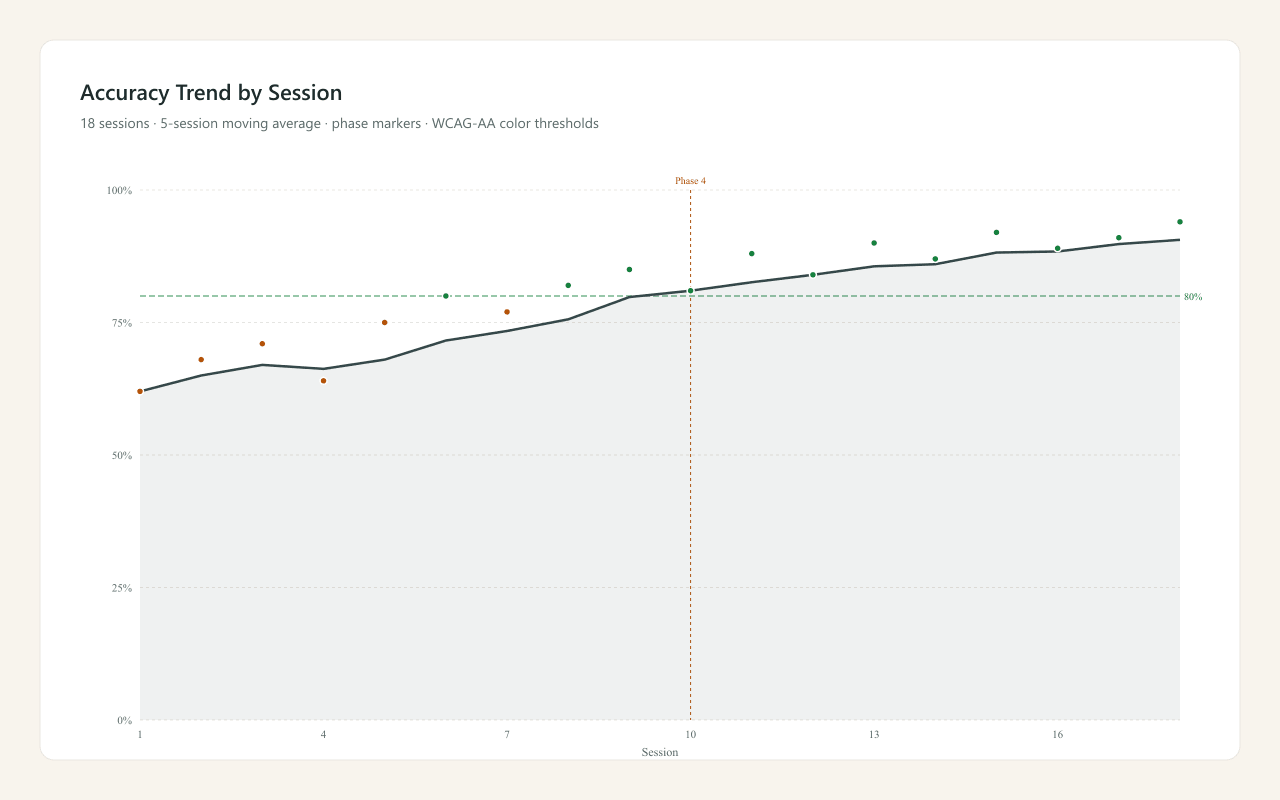
Is this improving, or was it just a good day?
Each dot is one session, and the line through them averages the last five, so a single bad afternoon does not read as a decline. The vertical marks show where the help the child had was reduced: accuracy usually dips just after one, and that is expected. The chart is called an accuracy trend.
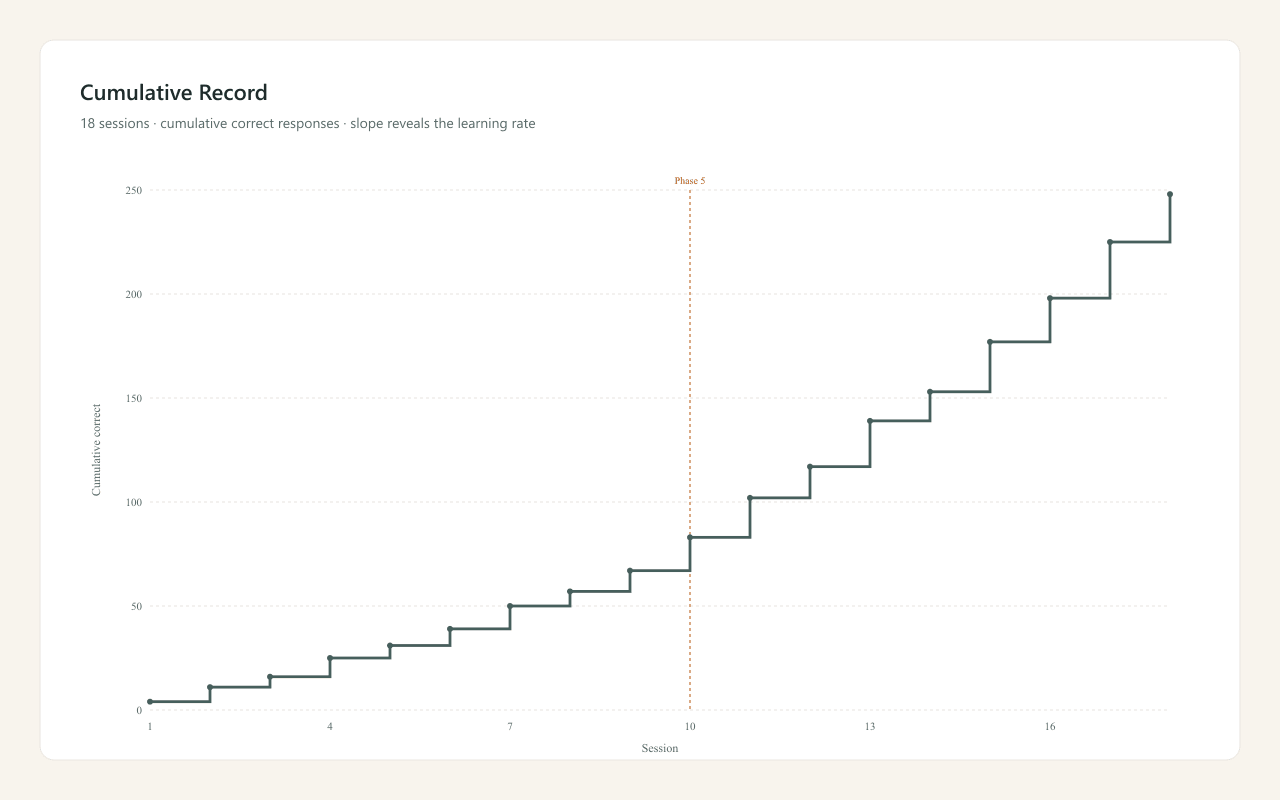
How much has added up, trial by trial
This chart adds correct answers up instead of restarting at each session, so a flat stretch means nothing new was added and a steep one means a lot was. Read a change beside how many chances the child had, what help they were given and what the session was like, before calling it learning. Its name is a cumulative record.
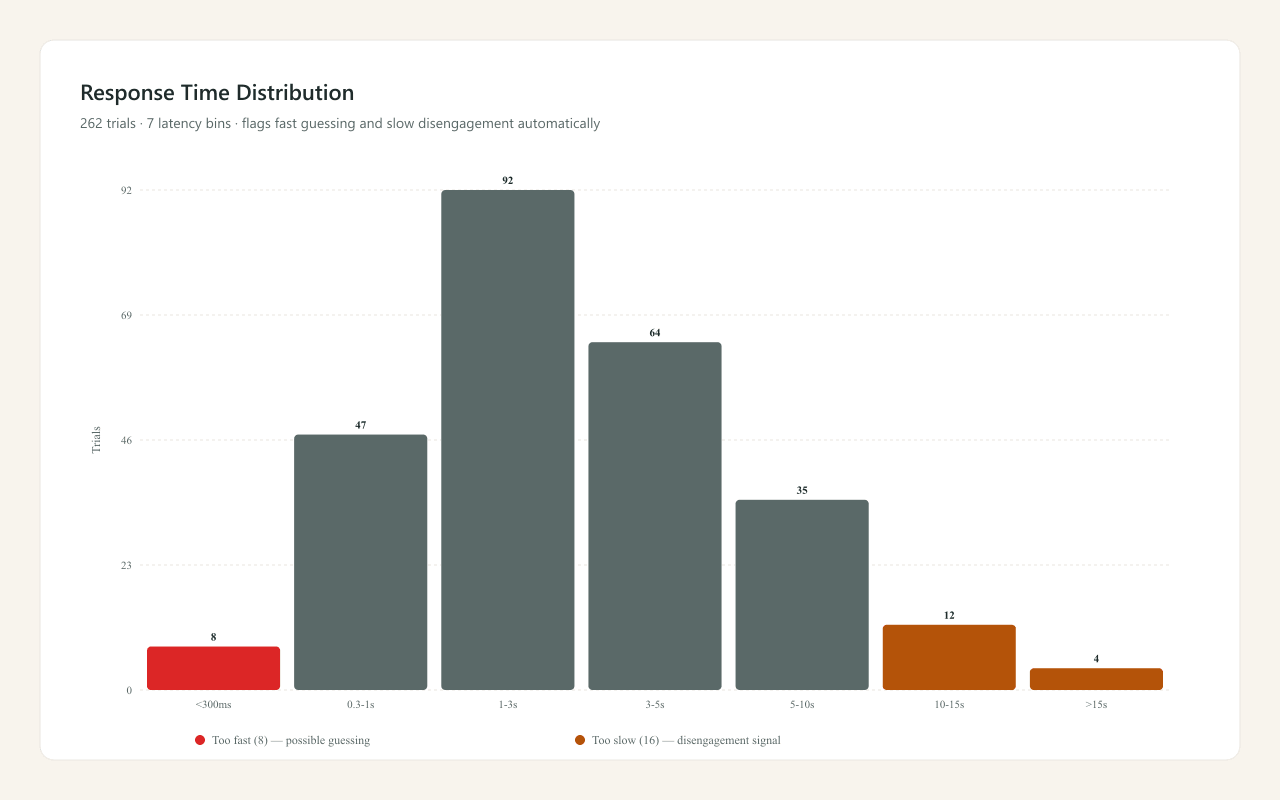
How long the child takes to answer
The bars split every response into seven bands, from under 300 ms — less time than it takes to look at the options — to waits of over 15 seconds. The app can flag both ends; what a very fast answer or a long stall means, whether guessing, reach, attention, the task or the room, is the Instructor's call.
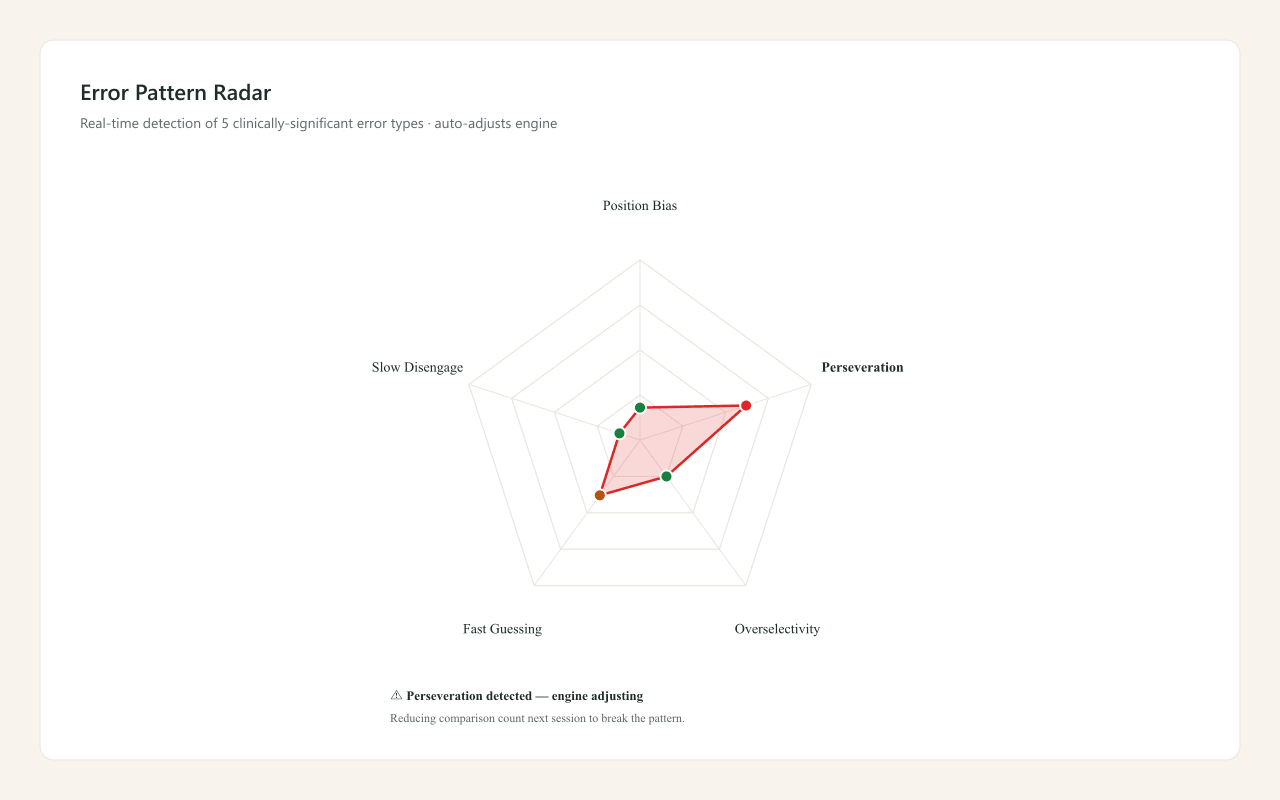
When the child finds a shortcut
Touching the same side every time, repeating one answer, fixing on a single feature, answering far too fast or far too slowly: five ways of being right or wrong that say nothing about what the child knows. Interlaza shows the evidence for each and the adjustment it made, which you can review; what the pattern means is the Instructor's reading.
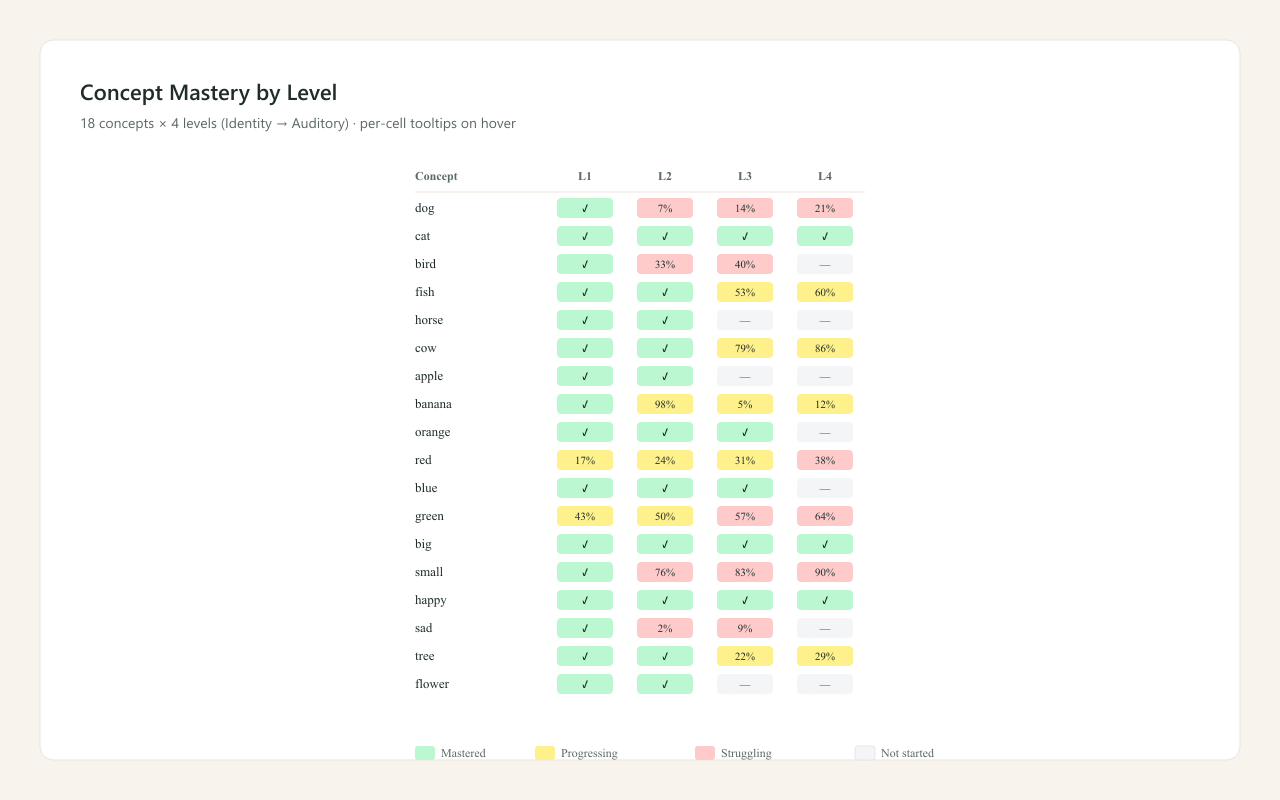
Which concept has fallen behind
One row per concept, one column per level — identity, non-identical, symbolic, auditory — and a color for how each cell is doing. Hovering one shows the accuracy, how many trials it took and where it stands. This is the quickest way to find the concept a child has stopped moving on. The chart is called a mastery grid.
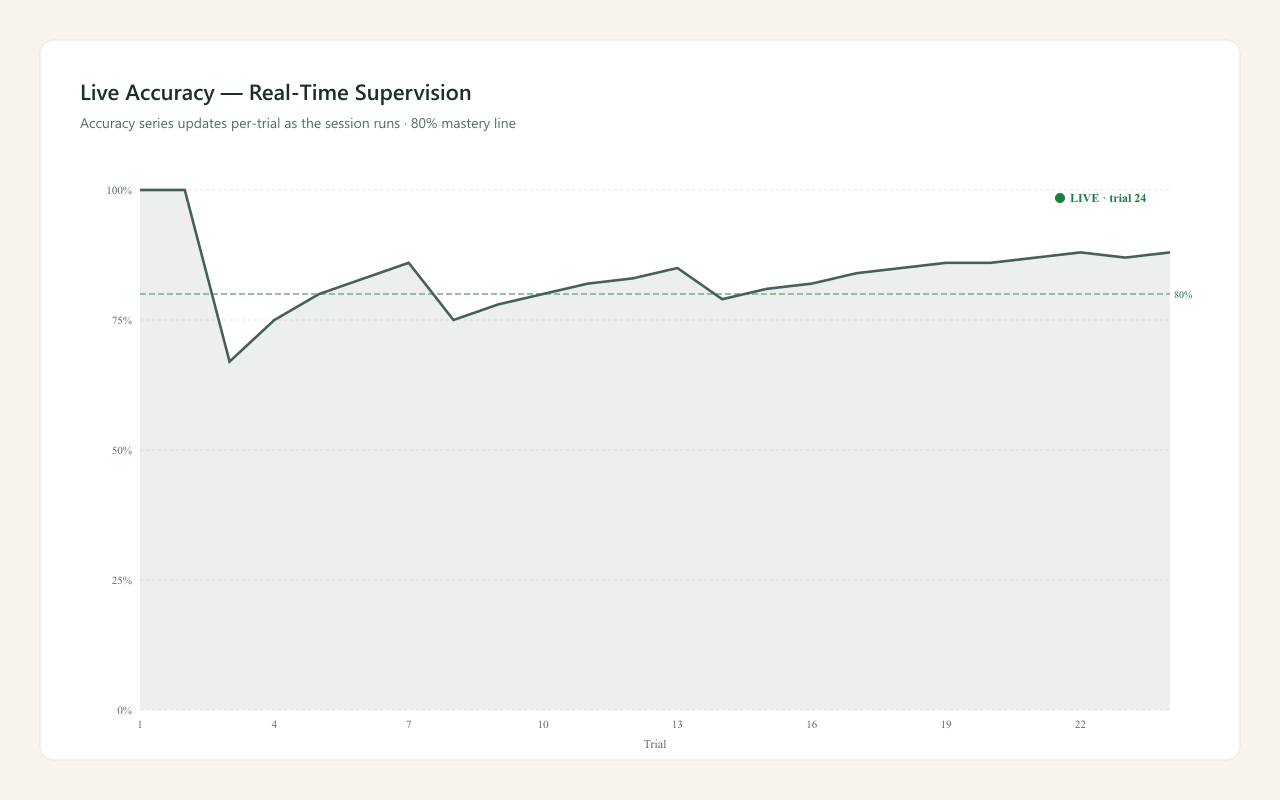
Following a session without being in the room
When a session is supervised, the supervisor sees each answer arrive about three seconds behind. Fatigue, drift and the moment something clicks show up while there is still time to say something, instead of the next day.
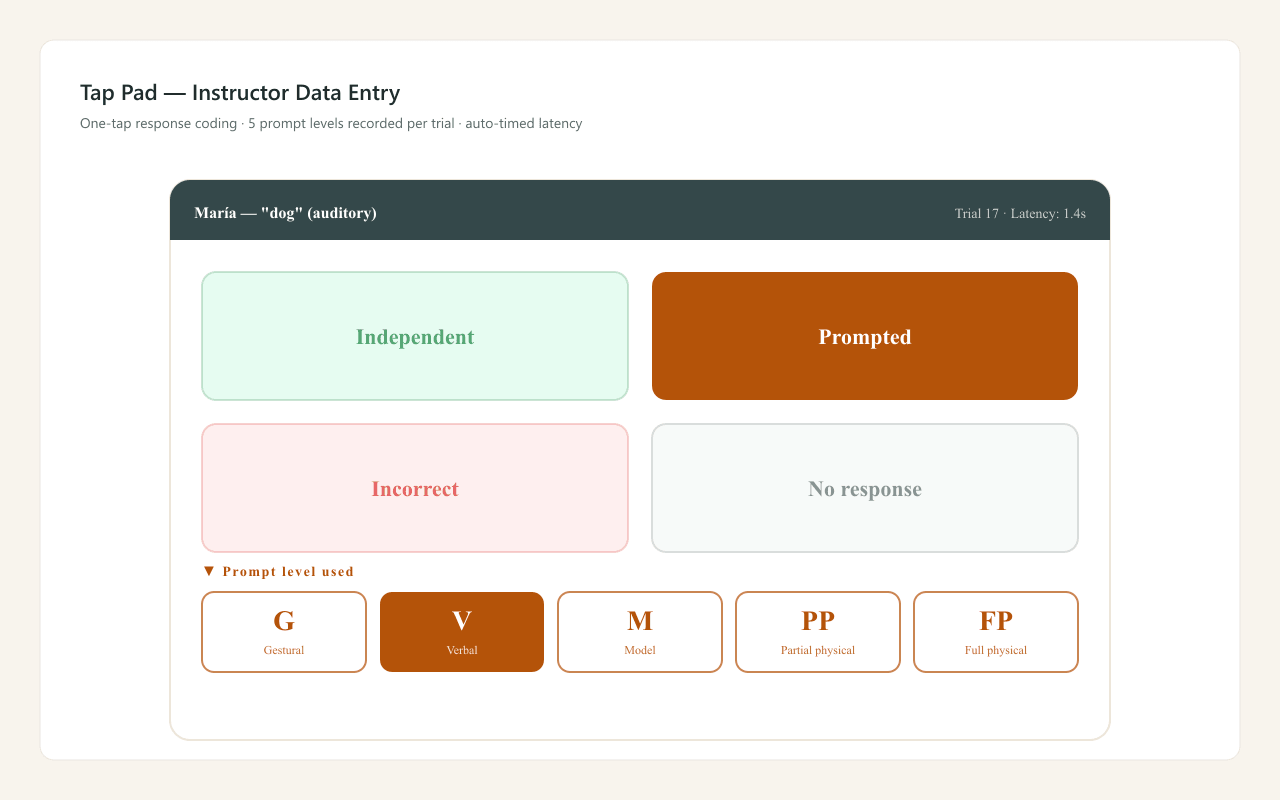
Recording without looking away from the child
When the instructor runs the session and the child is not the one on the tablet, Tap Pad takes each trial in one tap: independent, prompted, incorrect, or no response. The time is recorded on its own, so nobody has to watch a clock.
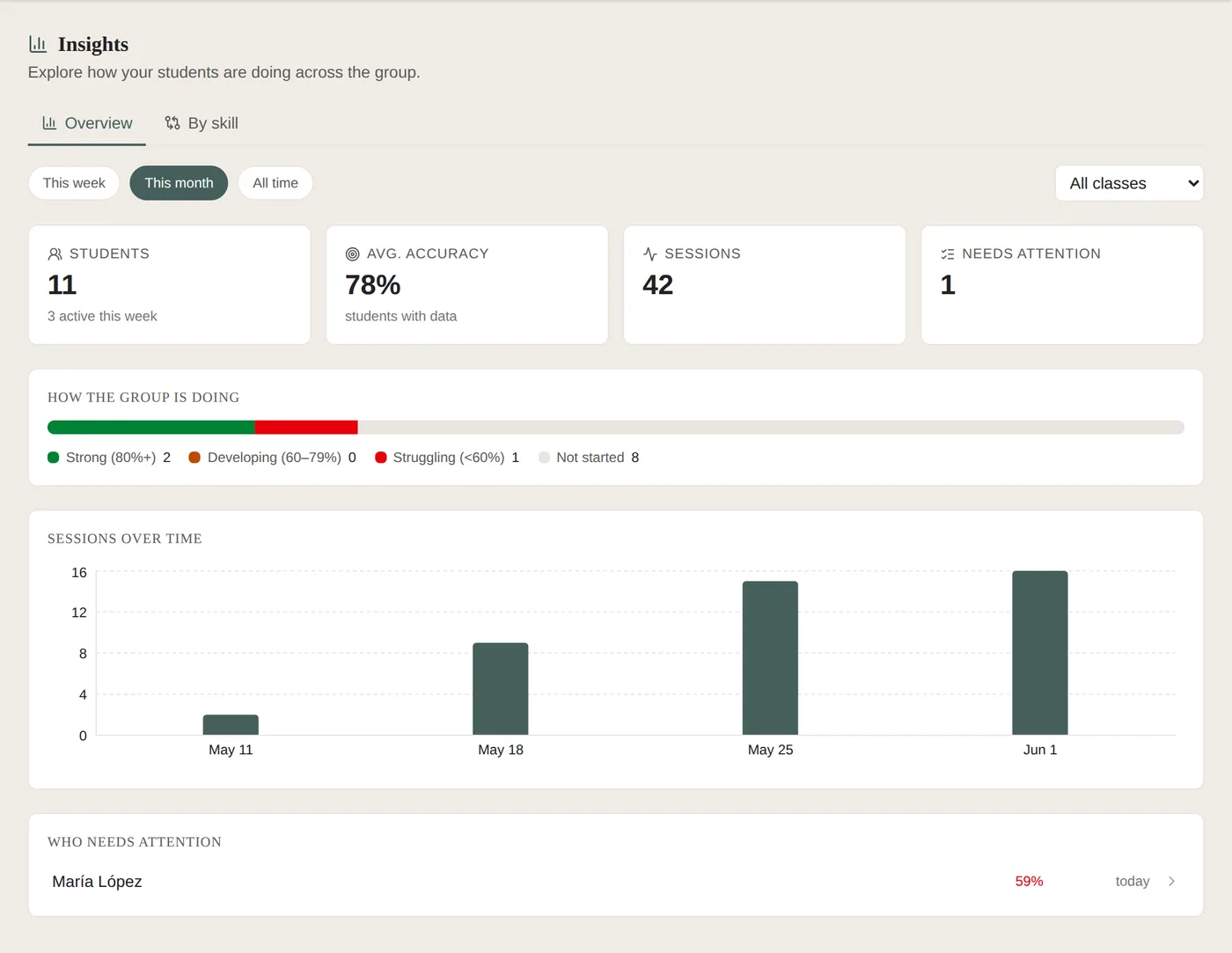
Who needs attention this week
One screen for every learner you support: how the group splits between those doing well and those stuck, how many sessions ran, and who has not practised at all. Filter it by class and by period. Built for someone carrying 25 to 100 learners, where opening each one in turn is not possible.
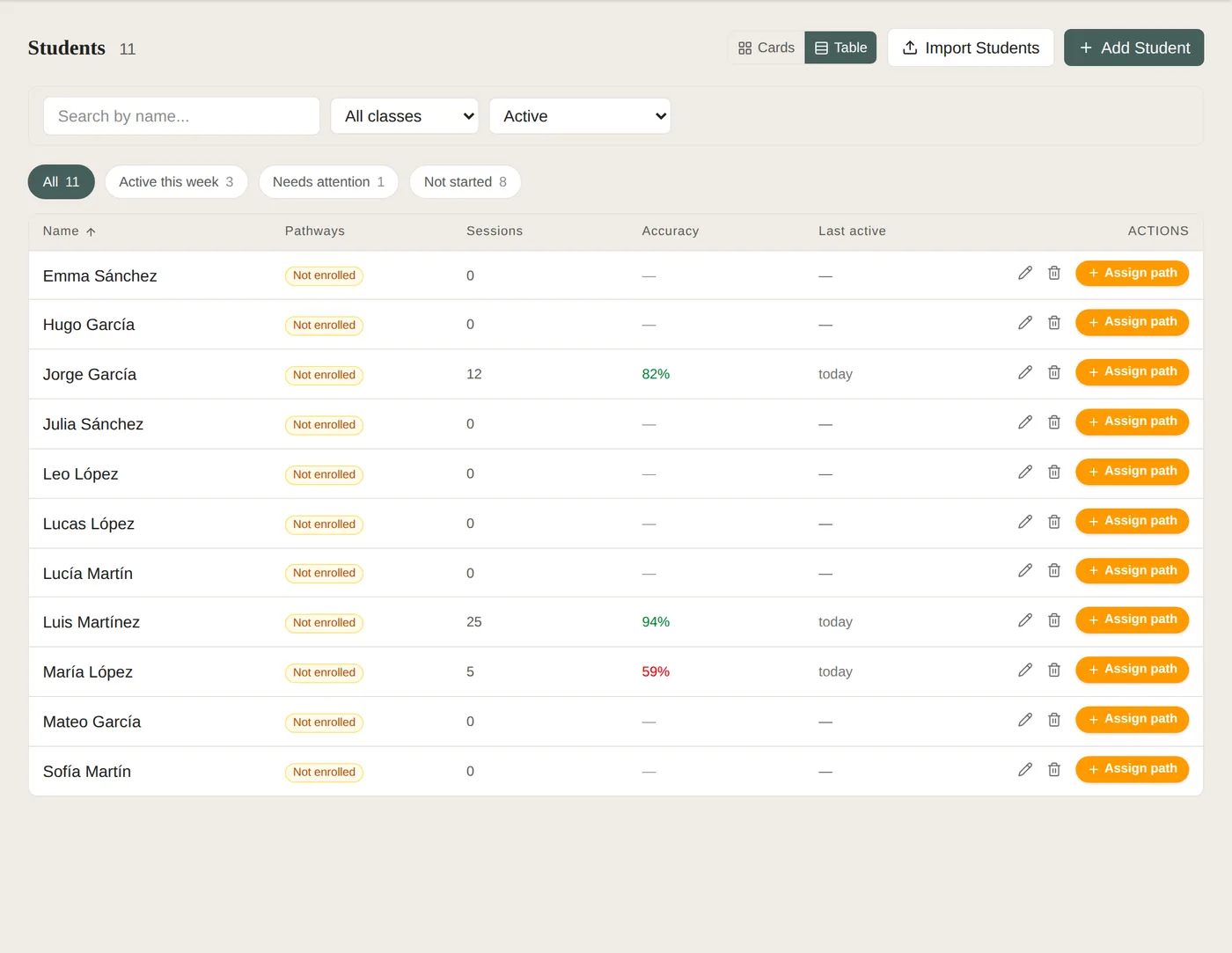
The whole roster, sorted by what matters
A plain list with sessions, accuracy and when each learner was last active, sortable by any of those columns. Three one-click views — active this week, needs attention, not started — pull out the learners who need you, without scrolling through cards.
What sets Interlaza apart
Every response is timed
Interlaza times every response from the moment the choices appear, bins it 7 ways and flags both extremes — a fast guess and a long stall are different problems.
The session notices a shortcut
Five ways a child can be right without discriminating — position, perseveration, overselectivity, too fast, too slow — each watched for while the session runs, with the adjustment shown to you.
Difficulty follows each concept separately
Interlaza estimates the probability that a given concept has been learned, and changes how many options a trial shows accordingly — one concept at a time. The model is Bayesian Knowledge Tracing.
A supervisor can follow from elsewhere
A supervisor follows a remote session answer by answer, about three seconds behind, without being in the room.
Trial data that shows if it was edited
Every trial log is sealed with a SHA-256 hash chained to the previous one, so editing a past trial breaks the chain and anyone can check it — not just us. That makes a later change detectable. It is not an external certification that nothing was altered, and it says nothing about how the trial was scored in the first place.
Get your data working for you
Every chart you see here exports to PDF for parent reports and to CSV for research analysis. Bilingual EN/ES out of the box.
Start free